

From shiny coins jingling in pockets to the digital currencies lighting up screens, money has come a long way. It’s like watching a toddler grow into a tech-savvy teenager—full of surprises and a little unpredictable. As society evolves, so does the way people think about and use money, making it a fascinating journey worth exploring.
Ever wondered how bartering turned into Bitcoin? Or why that crumpled dollar bill in your wallet feels like a relic from the Stone Age? Understanding money’s evolution isn’t just for history buffs; it’s crucial for anyone who wants to navigate today’s financial landscape. Buckle up as we dive into the quirky twists and turns of money’s transformation, revealing how it shapes our lives in ways we might not even realize.
Overview of Money Evolution
Money’s journey reflects shifts in society’s needs and technological advancements. Initially, people traded goods and services directly, utilizing bartering systems. Between 3000 BCE and 2000 BCE, ancient civilizations began using commodity money, such as livestock and grains, which offered intrinsic value. The introduction of metallic coins around 600 BCE standardized trade and provided a reliable form of currency.
In the Middle Ages, precious metals emerged as coins gained wider acceptance. Countries minted their unique currencies, which facilitated international trade. Paper money surfaced in the Tang Dynasty around the 7th century CE, shifting focus from physical weight to the convenience of easily transferable value.
The 20th century marked significant milestones, such as the adoption of fiat currency. Governments issued paper money not backed by physical commodities, relying instead on public trust. This shift enabled greater control over monetary policy and inflation. Digital payment systems followed in the 21st century, allowing credit cards and online transactions to flourish, increasing financial accessibility for individuals.
Currently, cryptocurrencies like Bitcoin are revolutionizing the financial landscape. Introduced in 2009, Bitcoin operates on decentralized networks, offering peer-to-peer transactions without intermediaries. This innovation addresses inflation concerns and limits currency supply, creating a demand-driven market for both enthusiasts and speculators.
Understanding the evolution of money helps individuals navigate today’s complex financial environment. From barter systems to digital currencies, each phase presents unique opportunities and challenges. Money’s development illustrates technological progress, making it essential to remain informed about its ongoing transformation.
Historical Background
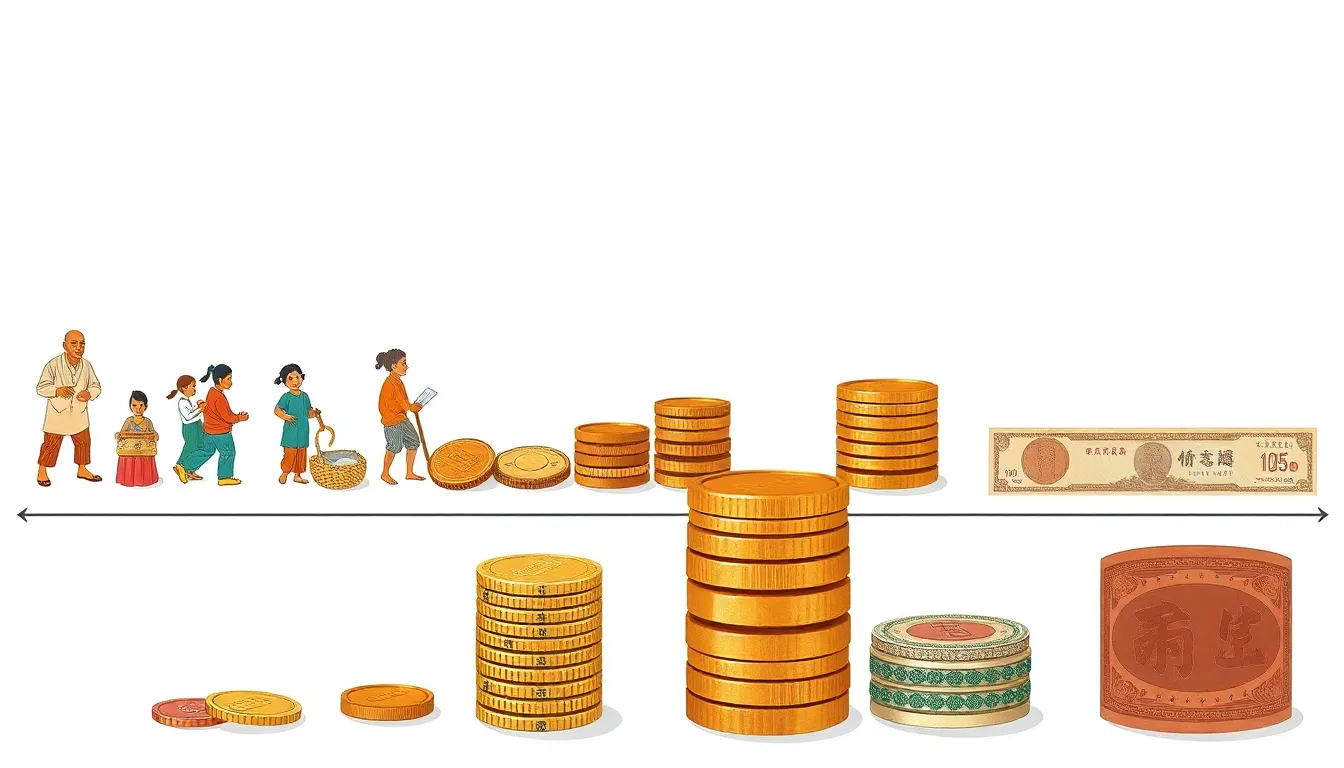
The evolution of money traces a fascinating journey, transitioning from simple trade practices to complex digital systems.
Barter System to Currency
Bartering marked the earliest form of trade, involving the direct exchange of goods and services. Ancient societies relied heavily on this system, yet it posed significant challenges like the double coincidence of wants. As civilizations progressed, the need for a more efficient method of trade led to the development of currency. Commodity money emerged, using objects with inherent value, such as shells and grains, facilitating smoother transactions. Eventually, standardized forms of currency began to take shape, paving the way for a more stable economic framework.
The Rise of Coins and Paper Money
The introduction of coins in various regions revolutionized trade practices. Metallic coins offered a durable and portable medium, simplifying transactions across distances. As trade expanded, distinct national currencies emerged to represent wealth and identity. In the Tang Dynasty, the rise of paper money marked another significant shift in monetary evolution. This innovation provided a more easily transferable form of value, impacting commerce profoundly. Growing acceptance of paper notes throughout the Middle Ages laid the foundation for modern banking systems and financial transactions.
The Digital Transformation
The transition to digital finance significantly reshaped how people interact with money. This evolution introduced innovative payment methods, making transactions faster and more convenient.
Introduction of Credit and Debit Cards
Credit and debit cards emerged in the mid-20th century, simplifying consumer spending. They provided a means to purchase goods without carrying cash. Each card offers distinct advantages; credit cards allow for borrowing against a limit while debit cards withdraw directly from checking accounts. Security features, such as chip technology and PINs, enhanced safety against fraud. As people embraced these cards, global card transactions reached over 26 billion in 2020, showcasing their popularity. The ease of use incentivized many to rely on plastic over cash.
Rise of Digital Wallets and Cryptocurrency
Digital wallets have rapidly gained traction in today’s economy. They allow users to store multiple payment methods securely in one application. Companies like PayPal and Apple Pay exemplify this trend by offering seamless integration with smartphones. Cryptocurrency emerged alongside this digital revolution, gaining attention for its decentralized nature. Bitcoin, as the first cryptocurrency, sparked interest in blockchain technology and its potential applications. By 2021, over 1,600 cryptocurrencies existed, reflecting the growing acceptance of this digital asset class. Together, digital wallets and cryptocurrencies signify a significant departure from traditional banking practices.
Impact on Society
Money has evolved significantly, influencing society in various ways. Understanding these impacts sheds light on the broader economic landscape and consumer behaviors.
Economic Implications
The evolution of money has resulted in profound economic transformations. Changes in monetary systems enable enhanced transaction speeds, yielding quicker economic growth. Currency diversification, especially with the rise of cryptocurrencies, increases investment opportunities. Digital currencies introduce efficiencies in financial systems, leading to cost savings for businesses. Adoption of innovative payment methods supports microtransactions, unlocking new market segments. By 2021, over 1,600 cryptocurrencies existed, pushing traditional monetary policies to adapt. Furthermore, the ability to conduct international transactions with ease promotes globalization, connecting markets and fostering economic cooperation.
Changes in Consumer Behavior
The transformation of money reshapes how consumers interact with goods and services. Increased reliance on digital payments leads to higher convenience and faster transactions. Customers prefer contactless payments, driven by security and ease of use. Mobile wallets, such as PayPal and Apple Pay, create a seamless shopping experience, encouraging impulse buying. Younger generations predominantly adopt digital currencies, indicating a shift in payment preferences. Changes also reflect a heightened awareness of financial management, as tools and apps provide easy tracking of expenses. As familiarity with technology grows, consumers increasingly prioritize digital over traditional payment methods.
Future of Money Evolution
Significant changes in the financial world are on the horizon as technology continues to advance. Emerging technologies play a crucial role in shaping how people interact with their finances.
Emerging Technologies
Blockchain technology offers a secure and transparent way to process transactions, reducing the need for intermediaries. Decentralized finance, commonly referred to as DeFi, enables users to engage in financial activities without traditional banks. Artificial intelligence enhances fraud detection and improves personalized banking experiences. Digital currencies issued by central banks, known as CBDCs, are becoming more common, allowing governments to control monetary policy while offering a digital form of cash. Furthermore, advancements in biometric authentication simplify security measures, making transactions safer and quicker.
Predictions and Trends
The rise of digital currencies is expected to dominate financial markets, as users gravitate toward decentralized options. By 2030, over 2 billion people may rely on digital wallets, emphasizing the shift toward cashless societies. Non-fungible tokens (NFTs) will gain traction in various sectors, including real estate and art, transforming ownership models. As mobile payment solutions improve, the integration of cryptocurrencies into everyday commerce is likely to become more prevalent. Increased regulatory scrutiny may shape the landscape of digital assets, ensuring consumer protection while fostering innovation.
The journey of money reflects humanity’s adaptability and innovation. As technological advancements continue to reshape financial systems, understanding the evolution of money becomes essential for navigating future challenges. From ancient bartering to the rise of cryptocurrencies, each phase offers insights into societal changes and economic growth.
The transition toward digital currencies and cashless societies indicates a significant shift in how individuals interact with money. Embracing these changes not only enhances convenience but also opens up new opportunities for investment and financial management. As we move forward, staying informed about these developments will empower individuals to make smarter financial decisions in an increasingly complex landscape.


